
Used Car Value Drops: A Practical Trade-In Value Guide for Owners
If your car feels worth much more to you than what a dealer offers, you're not alone. Trade-in value depends on several factors including depreciation, mileage, service history, market demand, accident history, tire condition, ownership profile, and even the preferred fuel type in your city. Understanding these factors can help you estimate a realistic trade-in value before visiting a dealership.
Why Used Car Values Drop Over Time
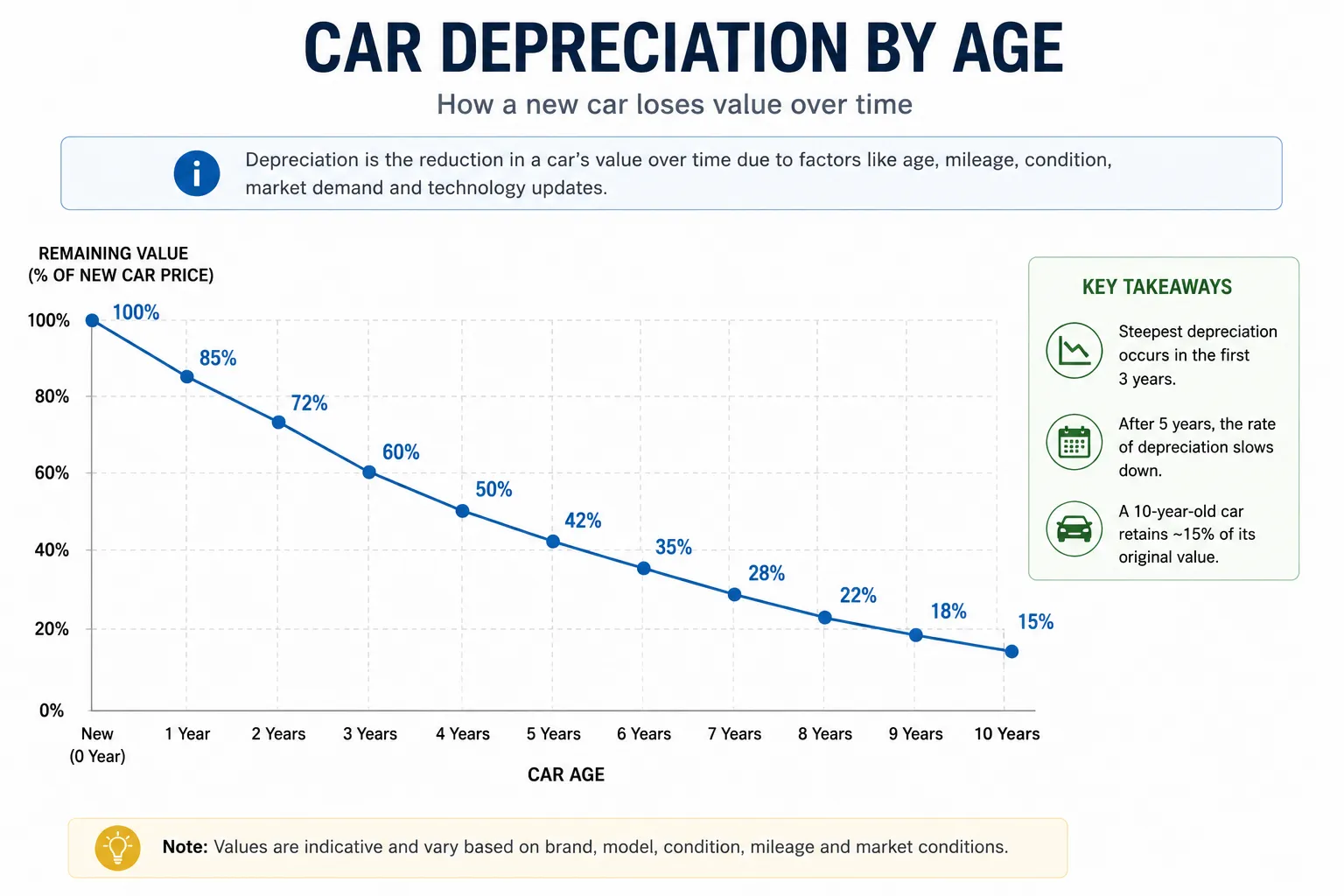
Every vehicle depreciates as it ages. The moment a new car leaves the showroom, its market value begins to decline. Factors such as age, mileage, maintenance records, accident history and overall condition determine how much value it retains over time.
While depreciation is unavoidable, well-maintained vehicles with lower mileage and complete service records generally command higher resale and trade-in values compared to poorly maintained or accident-damaged vehicles.
Key Insight: Depreciation is only one part of your car's valuation. Service history, mileage and overall condition can significantly increase or decrease the final trade-in offer.
Age-Based Depreciation Benchmarks
A useful starting point for estimating trade-in value is age-based depreciation. According to commonly used IDV-style depreciation benchmarks, the vehicle's value decreases gradually as it gets older. While these percentages do not represent the final dealer offer, they provide a practical baseline before considering mileage and condition.
| Vehicle Age | Typical Depreciation |
|---|---|
| Below 6 Months | 5% |
| 6 Months – 1 Year | 15% |
| 1 – 2 Years | 20% |
| 2 – 3 Years | 30% |
| 3 – 4 Years | 40% |
| 4 – 5 Years | 50% |
Reality Check: These depreciation percentages provide only a starting point. Actual trade-in offers also depend on mileage, condition and market demand.
Market Demand Also Influences Value
Besides age, used car prices are strongly influenced by market demand. Popular, fuel-efficient and well-maintained models typically retain their value better than niche vehicles, high-mileage cars or those with poor repair histories.
Many new vehicles also experience significant depreciation during their first year of ownership, making early resale particularly expensive for original buyers.
Market Insight: High-demand models with strong reliability records generally achieve better trade-in values than vehicles with limited resale demand.
A Simple Way to Estimate Trade-In Value
Owners can use a practical formula to estimate a reasonable trade-in range before approaching dealerships.
Estimated Trade-in Value =
Current Market Baseline − Age Depreciation − Excess Mileage Penalty − Bodywork / Repair Deductions + Service History Premium
For example, if a vehicle originally cost ₹10 lakh and falls within the 2–3 year age bracket, applying approximately 30% age depreciation provides a rough starting value of around ₹7 lakh. A complete service history, low mileage and accident-free ownership may help maintain this value, while heavy usage or repairs can reduce it further.
Checklist Before Getting Your Car Valued
Preparing your vehicle before requesting dealer quotes can help you understand its realistic market value and strengthen your negotiating position.
| Checklist | Why It Matters |
|---|---|
| Know the Exact Vehicle Age | Depreciation depends on months, not just the purchase year. |
| Collect Service Records | Complete maintenance history increases buyer confidence. |
| Review Insurance Claims | Accident history may reduce resale value. |
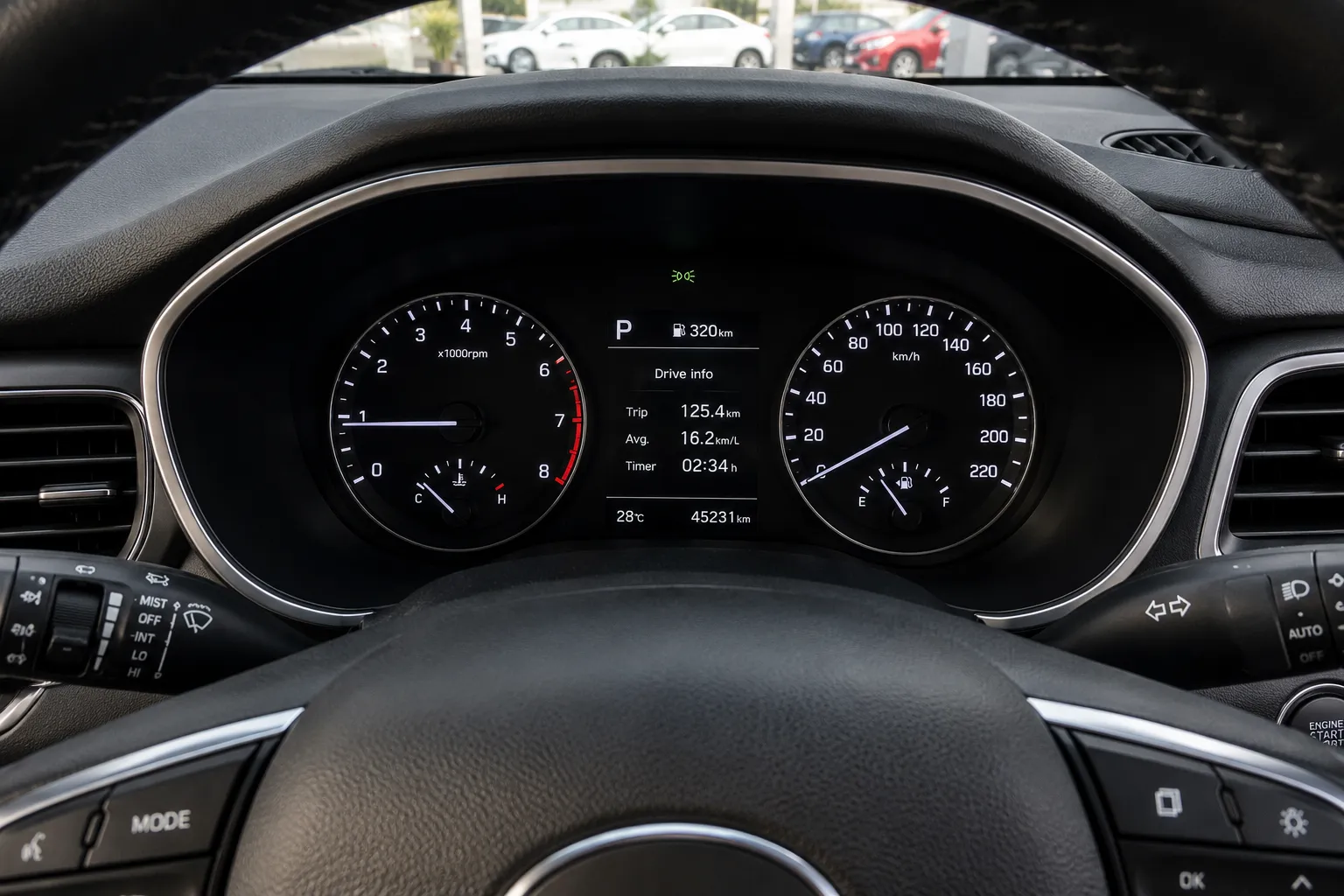
| Check Mileage | Higher-than-average mileage can lower dealer offers. |
| Inspect Tires & Condition | Good tires and clean interiors improve first impressions. |
| Compare Multiple Dealer Quotes | Trade-in offers often vary depending on dealer inventory requirements. |
Why This Matters for Buyers Planning an Upgrade
Understanding your car's approximate value before visiting a dealership allows you to negotiate with greater confidence. It also helps you compare trade-in offers against private sale opportunities and determine whether upgrading now makes financial sense.
For CompareAuto readers, combining depreciation estimates with service history and market demand provides a practical way to arrive at a realistic value range before beginning the buying process.
CompareAuto Verdict: Your car's trade-in value is influenced by far more than its age. Mileage, maintenance records, accident history, market demand and overall condition all contribute to the final offer. Estimating a realistic value before visiting dealerships helps you negotiate better and make informed upgrade decisions.
Frequently Asked Questions
What affects a used car's trade-in value the most?
The biggest factors include vehicle age, mileage, service history, accident record, overall condition and current demand in the used car market.
Can I estimate my car's value before visiting a dealer?
Yes. Using depreciation benchmarks along with mileage, condition and service history provides a practical estimate before requesting trade-in quotes.
Should I get multiple trade-in offers?
Yes. Dealer offers can vary depending on inventory requirements, local demand and current market conditions, so comparing multiple quotes is always recommended.