
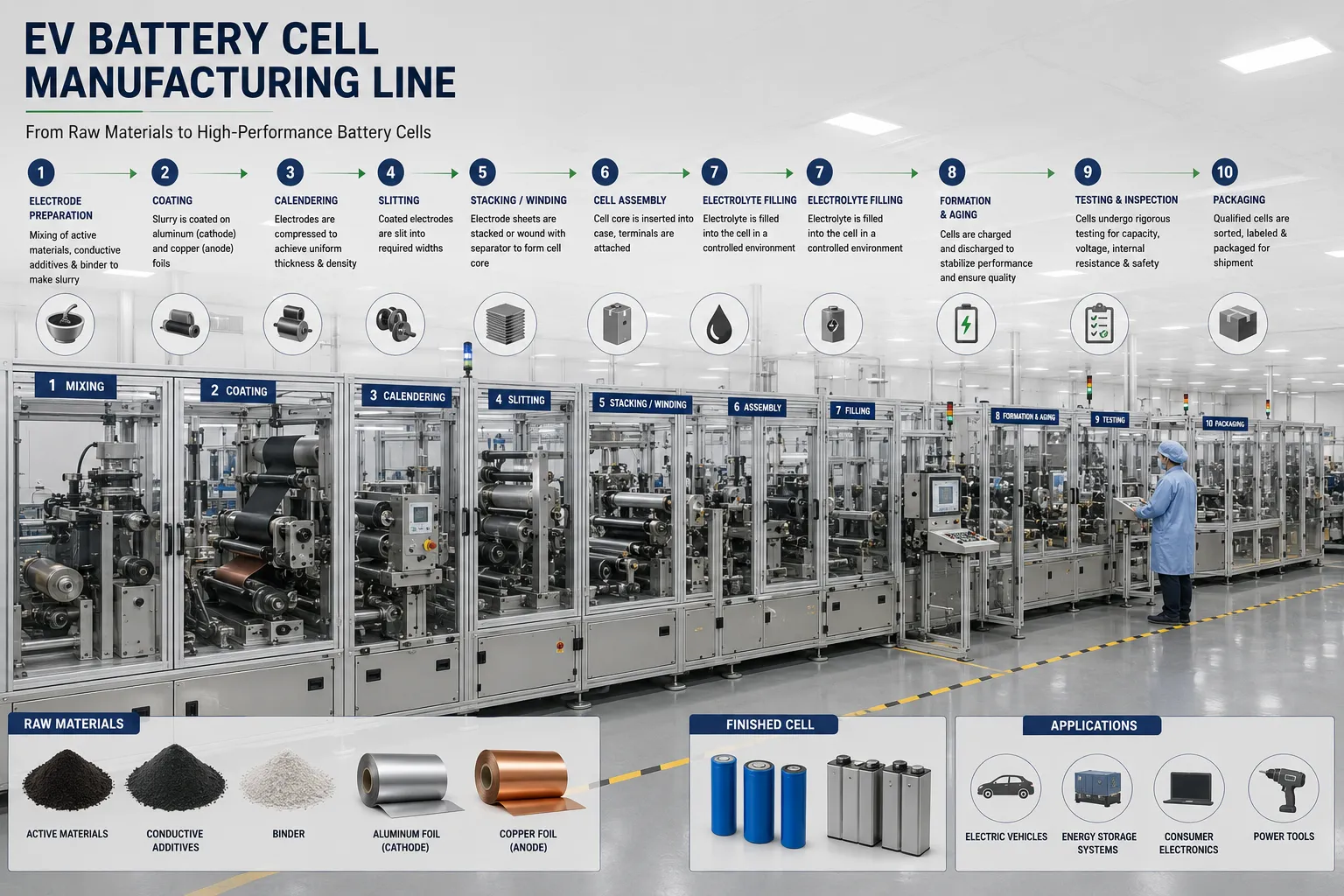
Why EV Production Is Slowing: Inside the Battery Supply Chain Crunch
Electric vehicles continue to shape the future of mobility, but the industry is now facing a new challenge. The conversation is no longer only about growing demand. It is increasingly about whether manufacturers can build EVs efficiently while managing battery costs, supply chain disruptions, and changing market conditions. Recent global developments show that battery sourcing and production planning have become just as important as innovation.
Why Battery Supply Chains Matter
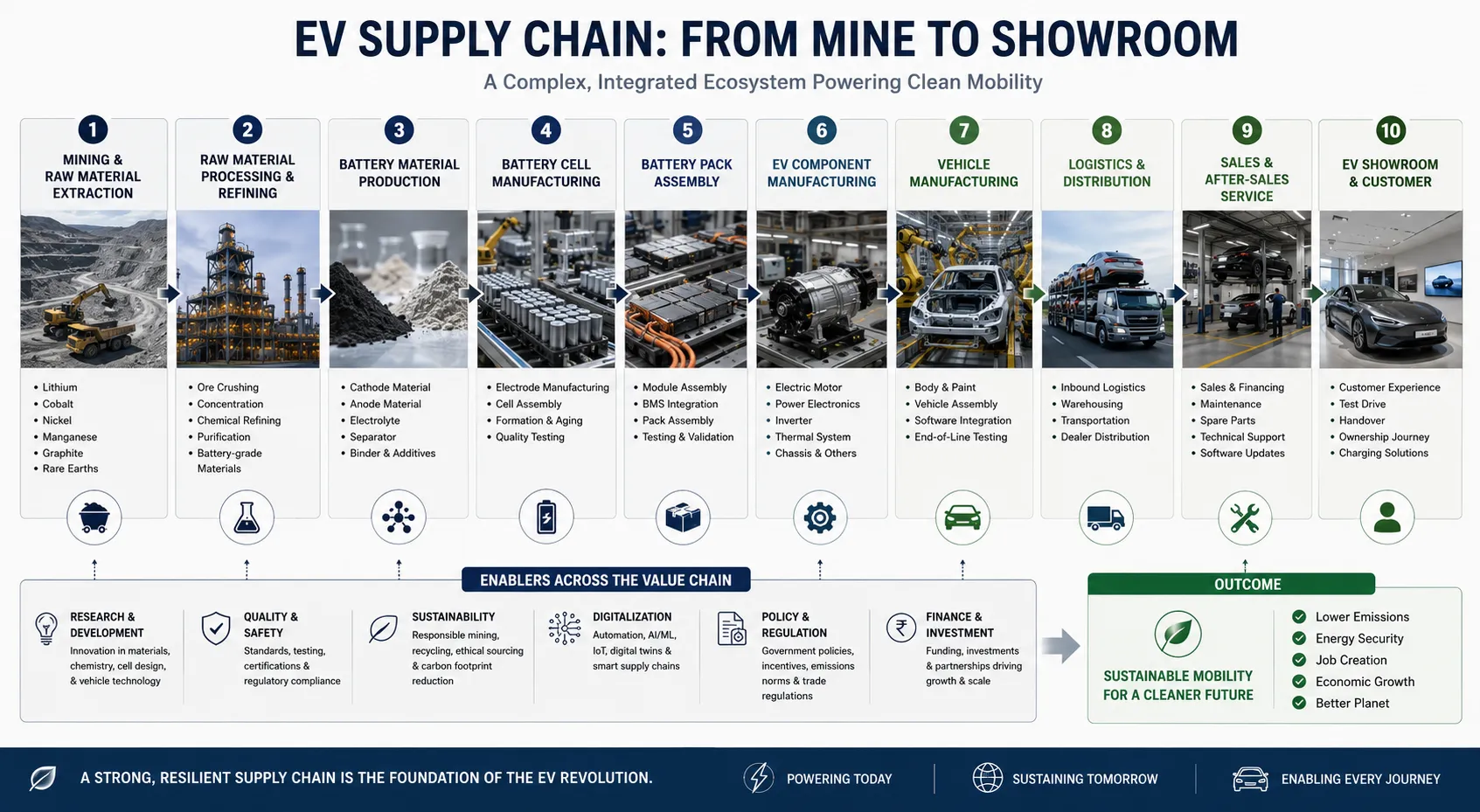
Every electric vehicle depends on a long and complex battery supply chain. Before a battery reaches a showroom-ready vehicle, raw materials such as lithium, nickel, cobalt, graphite and processed chemicals pass through mining, refining, battery cell production, battery pack assembly and finally vehicle manufacturing.
If any stage experiences delays or shortages, automakers can face higher production costs, delivery delays or limited battery availability. Even when customer demand remains healthy, production can slow because manufacturers simply cannot secure enough battery components at sustainable prices.
Key Insight: EV production depends on far more than vehicle assembly. A disruption anywhere in the battery supply chain can directly impact manufacturing schedules and final vehicle prices.
Raw Material Prices Continue to Influence Production
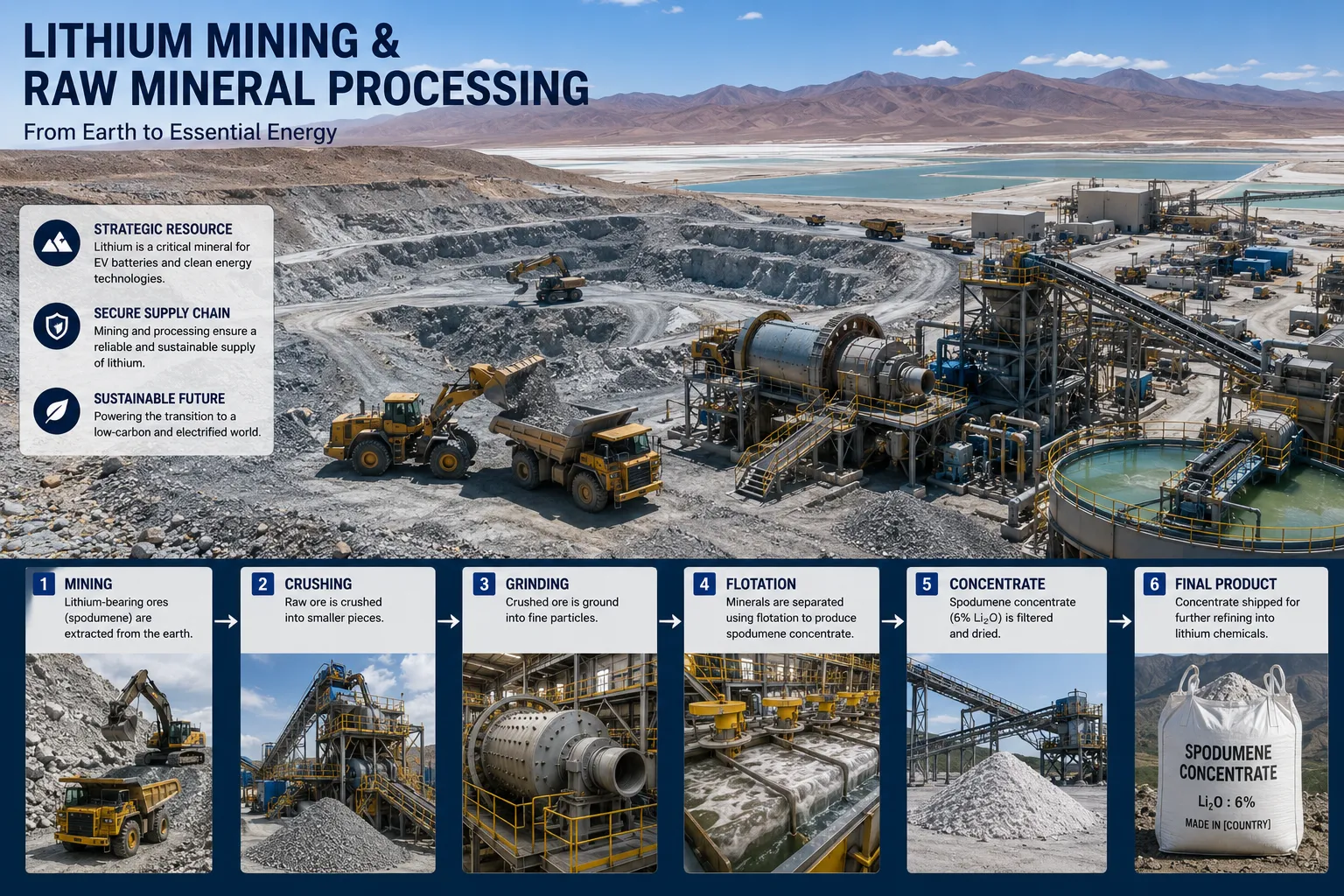
Battery manufacturers remain highly dependent on critical minerals. Reuters previously reported significant increases in lithium prices when global EV demand rapidly consumed available inventories. Although prices have since become more stable, manufacturers must still manage supplier contracts, inventory planning and exposure to commodity price fluctuations.
These challenges are particularly difficult for smaller EV manufacturers that lack the purchasing power and long-term supplier agreements available to larger automotive companies.
Reality Check: Stable battery production depends not only on technology but also on reliable access to critical minerals like lithium, nickel and cobalt.
Demand Slowdown Creates Additional Pressure
Supply shortages are only part of the story. Demand has also softened in some global markets, creating additional pressure on EV manufacturers. Reuters reported that several EV-focused companies experienced financial stress and even bankruptcies during broader market slowdowns.
This means manufacturers must balance production carefully. Producing too many vehicles increases inventory costs, while producing too few can delay deliveries and reduce market competitiveness.
Industry Trend: EV production can slow from both directions—limited battery supply and weaker customer demand can both reduce manufacturing output.
How This Affects Consumers
Although supply chain issues occur behind the scenes, buyers may notice several real-world effects when shopping for electric vehicles.
| Possible Impact | How Buyers May Notice It |
|---|---|
| Model Launch Delays | New EV models may arrive later than originally announced. |
| Higher Prices | Battery sourcing costs may increase prices for selected variants. |
| Hybrid Expansion | Manufacturers may introduce more hybrid models while battery supply stabilizes. |
| Battery Innovation | Greater investment in battery recycling and alternative chemistries. |
How Automakers Are Responding
To reduce future risks, manufacturers are investing in localized battery production, supplier diversification and long-term mineral sourcing agreements. Many companies are also expanding battery recycling programs and researching alternative battery chemistries that reduce dependence on expensive raw materials.
These strategies are designed to create more stable production while protecting manufacturers from future supply disruptions and commodity price swings.
Long-Term Strategy: Stronger supply chains, diversified suppliers and battery recycling are becoming just as important as launching new EV models.
Why the Current Slowdown Doesn't Mean EVs Are Failing
A slowdown in production should not be confused with a decline in the future of electric vehicles. Instead, the industry is moving from rapid expansion toward more disciplined and sustainable growth. Manufacturers are focusing on improving profitability, securing supply chains and matching production with realistic customer demand.
The companies most likely to succeed are those that combine reliable battery sourcing, diversified suppliers and efficient manufacturing while continuing to invest in new technologies.
CompareAuto Verdict: Slower EV production does not indicate the end of electric mobility. It reflects an industry adapting to supply chain realities, battery material availability and changing customer demand. As manufacturers strengthen sourcing strategies and improve production efficiency, EV adoption is expected to continue growing over the long term.
Frequently Asked Questions
Why is EV production slowing down?
Production is slowing because manufacturers are facing battery supply chain challenges, fluctuating raw material prices, funding pressure and softer demand in some markets.
Which battery materials are most important for EVs?
Lithium, nickel, cobalt, graphite and other processed battery materials are essential components used in modern electric vehicle batteries.
Does slower production mean EVs are losing popularity?
Not necessarily. Many manufacturers are slowing production to better balance supply chains, battery availability and market demand while continuing long-term investments in electric mobility.